

Multimedia data processing LSI-system laboratory
Unique university perspectives. Bold research. Real-world innovation. We’re looking to connect industry, government, and academia. Let’s innovate together!
Discover What’s Next in University Research!
Explore a variety of exciting demos powered by unique ideas and cutting-edge research from our university.
Our research team is divided into five groups, each with its own distinctive focus and technologies. Every group has prepared an interactive demo for you to experience!
Come see what we’re working on—and discover the possibilities of tomorrow!
Group 1 — Microcontroller R&D
Exploring innovative research and development using microcontrollers.
Group 2 — FPGA Processor Development
Designing and developing processors with FPGA technology.
Group 3 — GPS Security
Exploring the security challenges and possibilities surrounding GPS technology.
Group 4 — Aquaponics & Space Agriculture
Developing innovative technologies for aquaponics and future agriculture in space.
Group 5 — Image Processing R&D
Advancing research and development with a focus on image processing.
Five groups. Five perspectives. Countless possibilities.
Come visit us and experience the research firsthand!
Products & Services
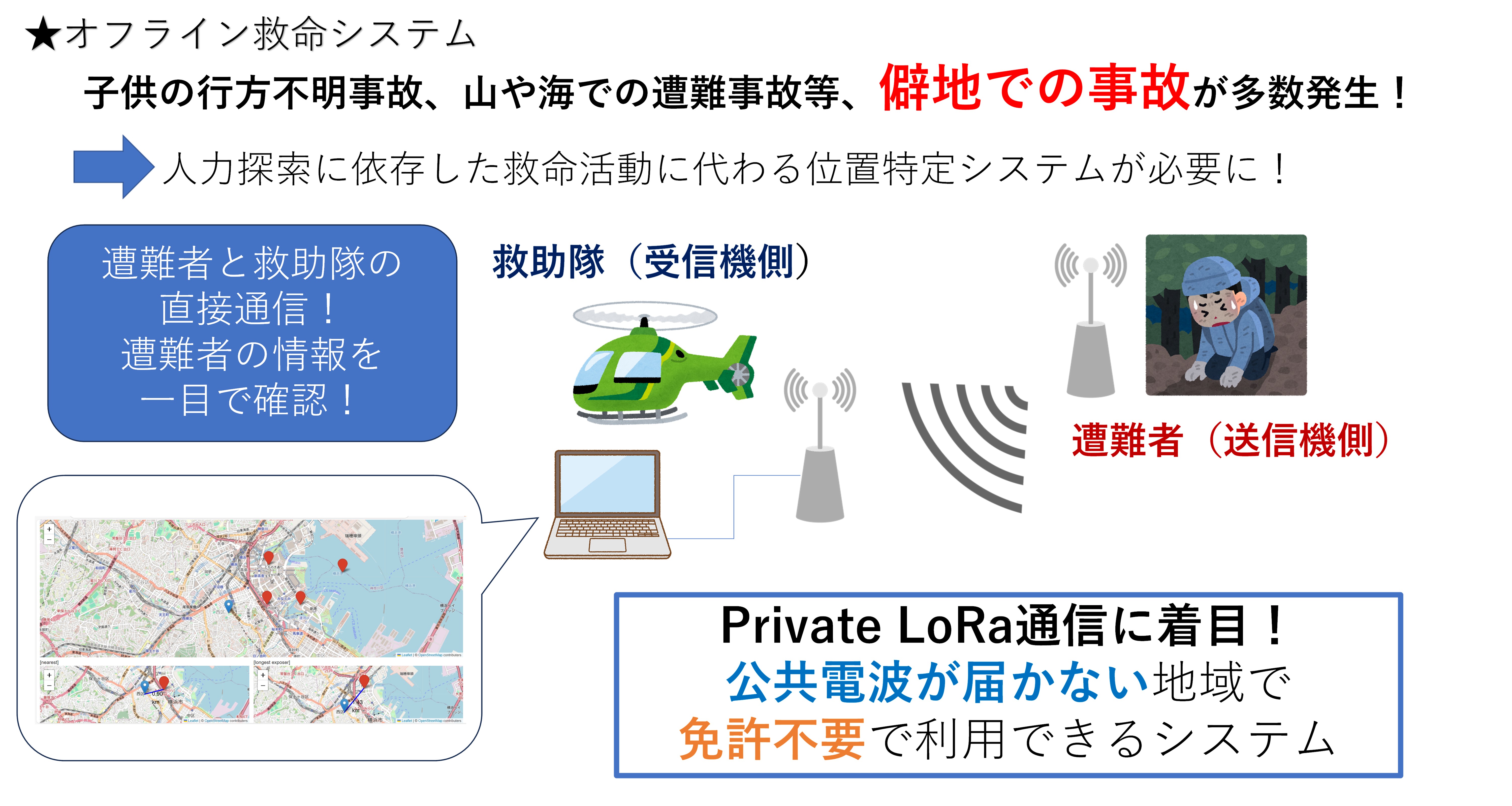
●Group1○Search Support System for Stranded Persons Using LoRa Communication, ●Group2○Accelerating FFT with CAMX
●Group1○
A search support system for stranded persons that uses LoRa communication and GNSS to provide location information even in environments where communication infrastructure such as cellular networks is unavailable. The system wirelessly exchanges location information between devices carried by the stranded person and rescuer, and calculates and transmits the distance between them. By utilizing LoRa, which enables long-range communication without a license, the system aims to support search and rescue activities in areas outside cellular coverage, such as mountainous regions.
●Group2○
・Accelerator Technology to Reduce CPU Workload
By offloading computational tasks from the CPU, we aim to develop a system that allows the CPU to focus on key tasks such as AI inference.
・Accelerating FFT through CAMX Parallel Processing
By leveraging CAMX’s ability to process multiple data simultaneously, we aim to accelerate the butterfly operations required for FFT.
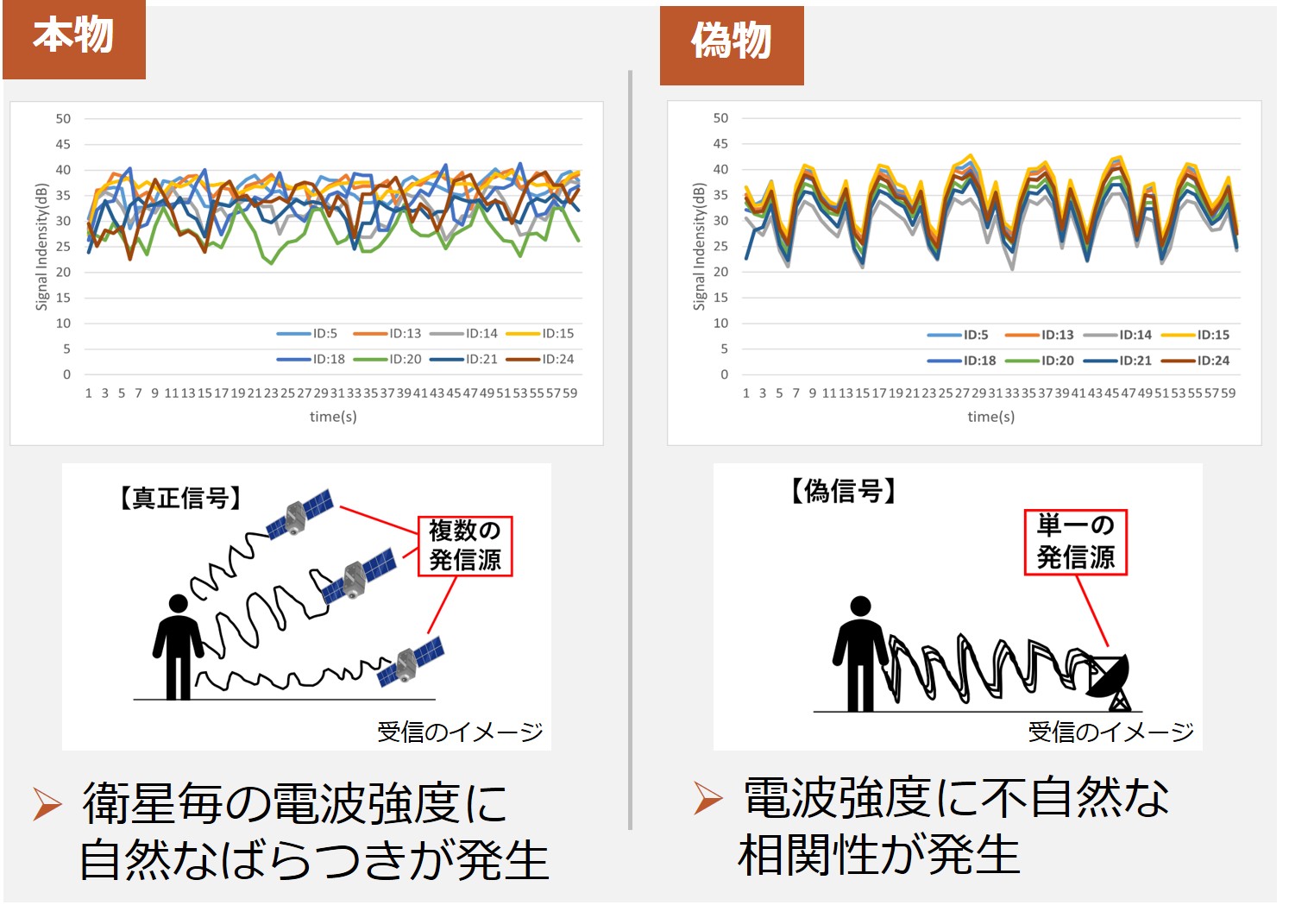
●Group3○Methods for Verifying the Authenticity of GPS Signals to Detect Fake GPS Signals, ●Group4○Visualizing Fish Movement with AI.Paving the Way for the Future of Smart Aquaculture
●Group3○
・Enhanced Security for Various Electronic Devices
This technology counters GPS misdirection caused by spoofing attacks—a major issue in recent years—by authenticating GPS signals. It significantly enhances the security of many electronic devices equipped with GPS.
・Authentication Using Signal Strength
Authentication is performed using the signal strength of GPS signals. Since this method does not rely on AI, even small microcontrollers can distinguish signals with high accuracy.
・Authentication Using IQ Data
Authentication is performed using IQ data, which represents signals as complex numbers. While this method is more difficult to implement on microcontrollers, it offers higher accuracy and the ability to estimate the direction of arrival of fake GPS signals.
●Group4○
Changes in fish behavior—such as swimming speed and the formation and dispersal of schools—serve as important indicators for assessing fish health, stress levels, and hunger. However, until now, it has been necessary for humans to visually monitor fish movements, which has been time-consuming and labor-intensive. To address this, we are developing a system that uses cameras and AI to automatically analyze fish movements in real time. The system captures footage of the aquarium with a camera and uses YOLOv8 to detect and track individual fish. Furthermore, by analyzing the spatial relationships between fish using a method called DBSCAN, we can automatically detect changes such as when fish form schools or when schools split apart. In our experiments, we were able to quantitatively confirm that fish swimming speeds and school formation patterns changed before and after feeding. Going forward, we aim to develop a system capable of automatically assessing fish health by analyzing this time-series data using models such as LSTM.

●Group5○Image analysis in just five minutes. Detect eye strain using your smartphone.
●Group5○
This study focuses on image processing technology targeting "eye strain." Based on research by ophthalmologists, we induced changes in blood flow within the orbicularis oculi muscle and conducted a verification experiment, the results and analysis of which are reported here. In the experiment, healthy subjects were tasked with transcribing unfamiliar English text for 10 minutes—a method consistent with prior research. We measured luminance values before and after the task and evaluated the magnitude of change alongside analog data (VAS). We present an analysis based on data accumulated from multiple subjects, examining the relationship between luminance fluctuations and eye strain, as well as the effectiveness of the detection method.