
Data-Driven AI: Visualizing Requirement-Compliant Design Spaces Early, with Explainable Rationale
In engineering practice, finding the design values and control parameters that determine a product’s performance takes a great deal of time and cost. Teams run simulations many times and repeat physical measurements, yet they often still struggle to clearly explain why a given value is truly the right one or why a particular design was chosen.
This talk introduces a data-driven AI approach developed by Secondmind, a UK-based engineering AI company. At the core of Secondmind’s technology are machine learning methods, including Bayesian optimisation and Gaussian processes. A Gaussian process regression model provides a predicted value for each point along with an estimate of how much that prediction can be trusted, that is, its uncertainty. Bayesian optimisation uses this uncertainty to choose the next point to measure. In this way, it efficiently narrows down the region that meets the target performance with a small number of experiments or simulations.
The talk presents this approach through two product areas. The first is Secondmind for DSE (Design Space Exploration), which supports system concept design. In the early stages of development, it visualises the design space where multiple requirements are satisfied at the same time and shows, with data, which parameters affect which performance outcomes and by how much. When requirements are changed, their effects become visible immediately, so design direction can be considered before any new simulations are added.
The second is Secondmind for Calibration, which supports system calibration. When determining control maps and calibration tables, it finds optimal values while substantially reducing the number of trials. In Secondmind’s track record, there are cases where the number of experiments was reduced by up to 80%.
A key feature of this approach is that it does not stop at “the AI gives an answer.” By visualising the uncertainty at each design point, it makes clear at a glance how far the design has been verified by data and where risks remain. Even when less experienced engineers take on the work, it becomes easier to explain which constraints were considered and what optimisation was carried out. In fields that require safety and regulatory compliance, this also helps provide evidence for design decisions.
In addition, Secondmind’s research team has applied advances in machine learning research to real engineering problems. Its work on Bayesian optimisation has been published at international conferences such as NeurIPS and UAI, and this research foundation underpins the reliability of its products.
Profile
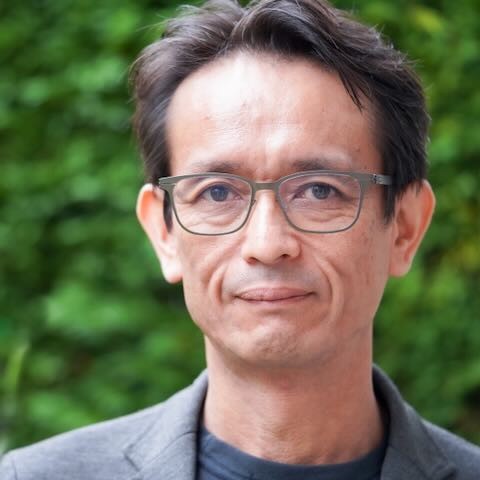
Tomohiro INOUE
Secondmind Country Manager